Thursday, September 6, 2007

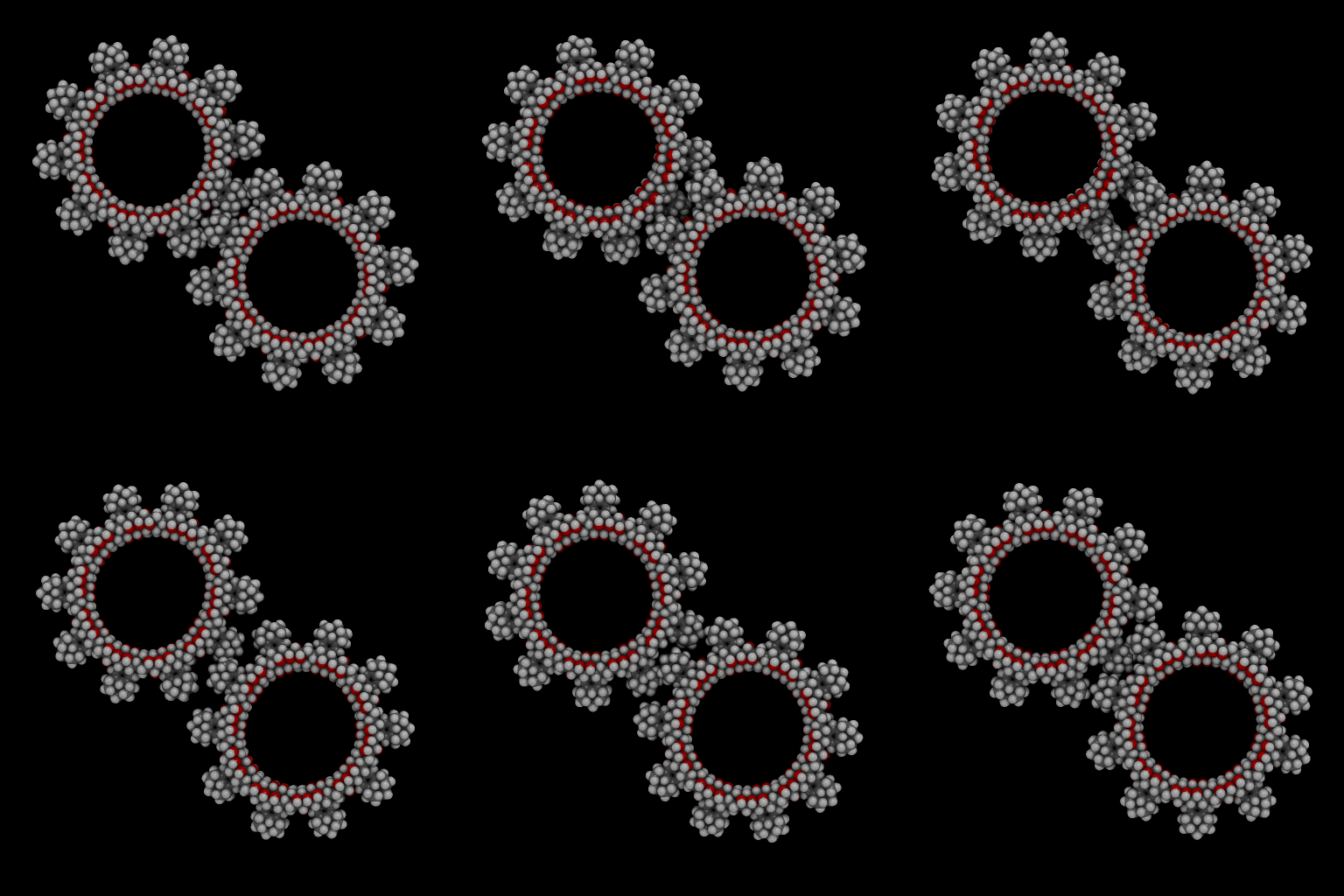
diamondoid spur gears at 90GHz


They could mesh a little better, but making them thicker will probably help that. However they are pretty robust, and the black background really makes them pop. I guess now I'll try to break them.

If I took a little shortcut and used rotary jigs for bearings instead of atomistic shafts, I could build and simulate a system using around a hundred or so of these gears with my two main computers. It would take a month to simulate one iteration, but it would be worth it. Adding shafts and casings would really increase the atom count fast. But I have developed some pretty sophisticated hiding techniques, so I could build and insert little chunks at a time. We'll see. I still need to design the thing first.

Wednesday, September 5, 2007

I guess we could go with diamondoid gears


But will they pass the Perry test?

I'm going to simulate these to make sure the teeth stay on, once in a conventional use and then maybe counter-rotating to see just what they will stand.

MTF

Tuesday, September 4, 2007

you know, for pumps...or turbines


Not too much tonight. Perry has brought up some concerns that the silicon capped spur gears may prefer to react with each other than merely rotate. I am not too sure how to check for that, so I have asked for his help. (see comments last post)

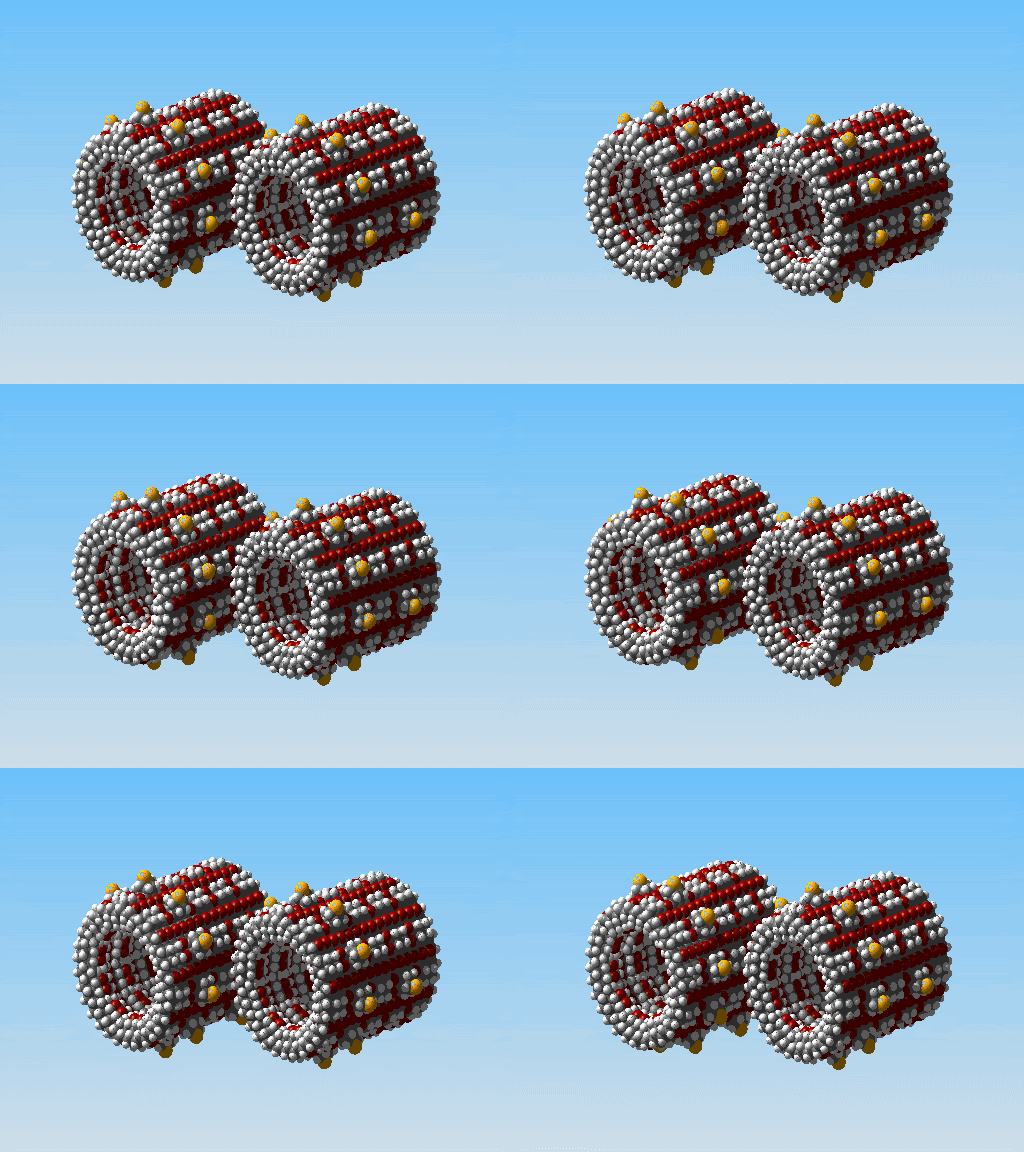
In my day job I have been spending a lot of time writing tutorials that show how to build the things you see here and elsewhere. This afternoon I started one for the famous neon pump designed by K. Eric Drexler. Anymore I am getting to a point where I can look at these things and pretty much see how I would go about building them. However, the rotor of the pump, with its threading, threw me for a loop for a good half hour. But as you can see from the above picture, I figured it out. This one is larger than the original, but I am sure the same process can be used to build it. Creating the threads is really pretty easy. It is connecting them to a shaft I am a little worried about still. I'm not going to spoil all my hard tutorial writing by giving it away here though. The funny difference between writing tutorials and blogging about this stuff is I am sure I am expected to proof-read the tutorials.

Also if anyone looks at the archive calender there on the right, they might wonder what was up with April; only six posts? I was finishing grad school then. There is still at least one more piece of paper I want to file away with the others, and class resumes tomorrow. I fully intend to keep up the breakneck pace though. This is, after all, a place for machines.
Monday, September 3, 2007

now those are spur gears


A refinement to the 10-gears for the mechanical calculator

Whenever I think of molecular gears or what have you, these are a lot closer to what I envision then the tiny little sulfur atom teeth on the last iteration. These silicon tipped teeth look damn near industrial: Detroit style nanotech.

tracking down the cnt data storage system designers

I found out who first published on the using fluorine and hydrogen as a potential storage device. It is a little embarrassing because it was right under my nose the whole time. You have to let a guy know about these things sometimes. Here is the original, and I dare say famous, site where it is referenced. The original paper is:

C. W. Bauschlicher and M. Rosi, "Differentiating between hydrogen and fluorine on a diamond surface", Theor. Chem. Acta, volume 96, pages 213-216 (1997).

Now off to track this down...

getting some help on the electrostatic potential images


Remember how I wanted to create an electrostatic potential image of the cnt data storage system, but couldn't figure out how? Well I still can't, but I am getting some help from my new friend/colleague Brian at nanohive. This is a preliminary picture he made. I just wanted to post it.

MTF

Saturday, September 1, 2007

turning the 10 gears into shaft


I may go back and replace white hydrogen squares with red oxygens. I am not sure if I'm going for the checker board look. I may also extend the teeth another lever too.

I can go ahead and make a counter out of these, but I would like to do something a little more.